Client work
Atlas Planner
AI goal planning for a coaching membership. Members assess life and business, then get focus areas, goals, and scheduled actions from the client's own library.
- Wheel of Life assessment
- AI goal suggestions
- Recurring reminders
- Progress tracking
The problem
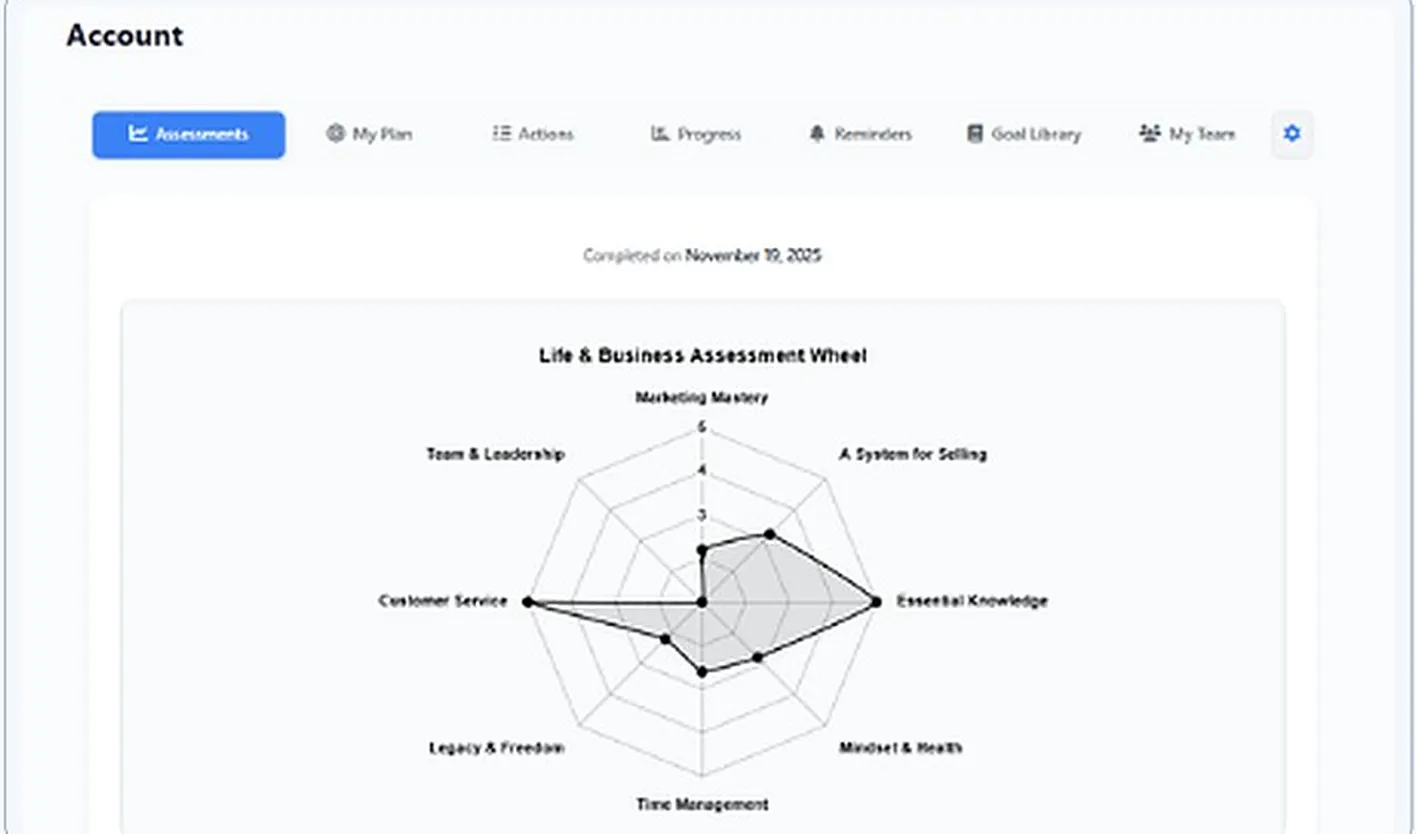
Picture a member of a coaching community. They’ve just scored their life and business on a wheel, and now they’re looking at the results, wondering what to do first.
The client already had the answer: a library of goals and actions their coaches trust. What they didn’t have was a way to match the right ones to each member. A generic chatbot would ignore that library, and one bad AI reply could land straight in someone’s plan.
What I built
Atlas Planner turns those scores into a plan. The AI picks the areas that matter most, then suggests clear, measurable goals and actions taken from the client’s own library, not made up on the spot. Each week, a check-in sends a short nudge and offers to move anything that slipped.
Every AI reply has to match a strict format. If it doesn’t, the plugin rejects it and asks again, so nothing broken reaches a member’s plan. Personal details are removed before anything goes to the model, and members can delete their AI data. Every call is logged with its speed and cost. If the AI ever needs to be switched off, simple rules take over and members still get suggestions.
The planner itself had to be dependable, too. Repeating actions stay correct across time zones and daylight saving. Reminders, daily digests, and weekly check-ins run on time. It works with the tools the community already used: BuddyBoss notifications, ActiveCampaign email, SMS, the CRM, and GamiPress points and streaks. Members can export their plan as a PDF, a calendar file, or a spreadsheet.
How it went
The first version went live in eight weeks. Then came seven months of weekly releases as members used it and the client asked for more. This project and Custom GPT Manager were delivered across four contracts, all rated 5 stars.
What’s public
The client owns the code, so it isn’t public. The engagement is listed on Upwork.